In this edition of Leading the Way, we spoke with Željko Šaravanja, Group Supply Chain Director, about supply chain leadership in a complex and highly regulated environment. He shares his view on what makes teams stronger, why supplier relationships matter, and how good decisions are made when the context is not simple.
Having worked across both FMCG and pharmaceutical industries, what would you say are the biggest differences in how supply chains are managed and led?
The biggest difference is the balance between speed and risk.
In FMCG, things move very quickly. Demand shifts, promotions come and go, and you’re often making decisions on the go. There’s a strong focus on speed and the ability to react immediately.
In pharma, the context is different. You still need to be responsive, but decisions are typically more deliberate. There is a stronger focus on quality, compliance, and traceability, so planning and risk assessment play a bigger role.
Still, good leadership has the same foundation in both industries: clear communication, collaboration, and the ability to keep teams focused when things become complex.
What attracted you to Frontier Zdravlje at this stage of your career?
I was attracted by the stage the company is in. Frontier Zdravlje has a strong foundation, but also the ambition and energy to keep growing.
That combination I personally find very motivating. It means there is room to build, improve, and have a real impact.
What stood out to me is the entrepreneurial mindset. People are encouraged to speak up, challenge things, and take ownership. That kind of environment makes a real difference, because you feel you can contribute, not just follow processes.
I also see a real opportunity in being part of a company that is looking beyond the traditional generics space and exploring more specialized areas, including biopharmaceuticals.
Looking at today, what are the key priorities for developing the supply chain at Frontier Zdravlje?
Sourcing is one of the key priorities. Expanding our sourcing options helps reduce dependency, improves flexibility, and makes the overall supply chain more resilient and easier to plan.
Another important focus is to make our supply chain even more proactive. It’s not only about responding effectively, but about anticipating potential challenges earlier and preparing options in advance.
We also continue to build a team culture that is practical, solution-oriented, and open to new ideas, as that mindset makes a real difference in day-to-day operations.
In a highly regulated environment like pharma, how do you balance efficiency, service levels, and strict quality and compliance requirements?
In pharma, quality and compliance set the framework for everything we do. Efficiency matters, but it always has to fit within that framework.
In practice, the balance comes down to how well teams work together. Supply chain, quality, production, and regulatory all need to be closely aligned.
I don’t see compliance as something that slows us down. When it’s built into the way you work, it actually helps create consistency and reliability. The goal is to stay efficient, while making sure the system is stable and decisions are made in a responsible way.
From your experience, what is the key to building strong and accountable teams?
It starts with having the right people in the right roles. Skills matter, but mindset matters just as much.
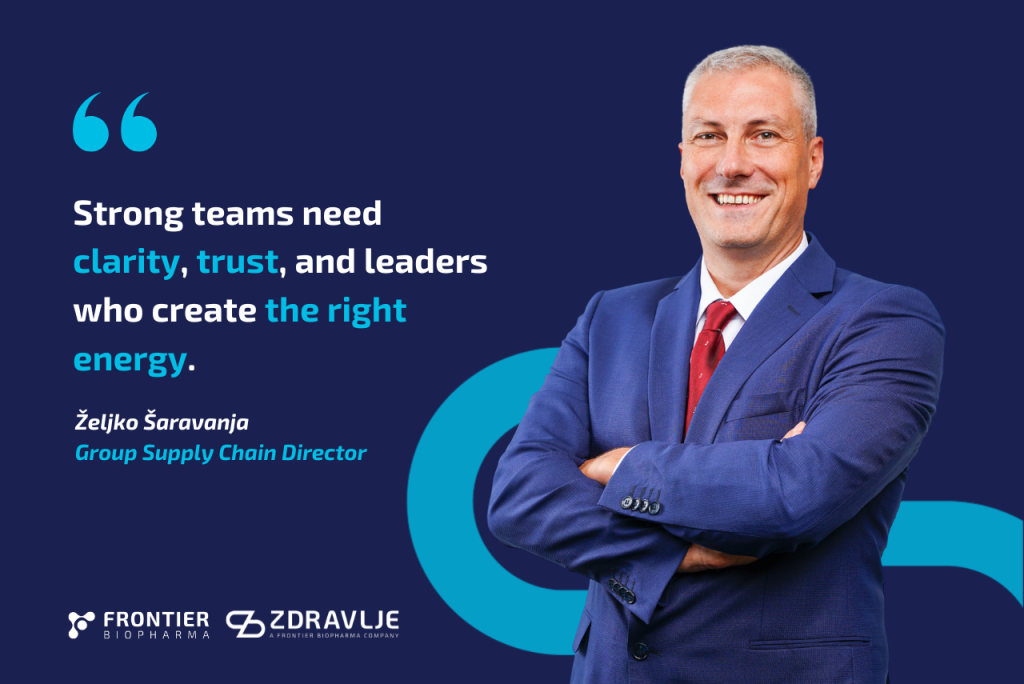
Strong teams need clarity, trust, and leaders who create the right energy. People should know what is expected from them, but they should also feel supported to take ownership.
I believe leaders have a big impact on the energy of a team. If the focus is on obstacles, people lose motivation. If the focus is on solutions, people become more confident and accountable.
What is something in supply chain that people tend to overlook, but in your experience makes all the difference?
Supplier relationships.
People often focus on cost, timelines, and processes. Those things matter, of course. But the relationship behind them can make all the difference, especially when unexpected challenges appear.
When you build trust with suppliers, you create space for honest conversations and faster problem solving. You also gain better visibility into potential risks.
A good supplier relationship is not just transactional. It is a partnership.
Looking back, what advice would you give to your younger self at the start of your career?
I would tell myself to listen more and ask more questions before reacting.
Courage is important. I still believe that fortune favors the brave. But with experience, you learn that courage becomes stronger when it is combined with patience, wisdom, and good judgment.
Not every situation requires an immediate reaction. Sometimes it is better to observe, understand the full picture, and then act with more clarity. I would also tell myself to stay curious, because every experience teaches you something.